
Share


The Busha Business API provides programmatic access to stablecoins and digital assets infrastructure for African and global businesses. Through a single REST API, companies can buy, sell, receive, and convert digital assets for themselves and their merchants, effectively building their own crypto on-ramp and off-ramp without managing the underlying infrastructure and complexity.
Most African businesses wanting to integrate stablecoins and digital assets face a choice: build everything from scratch or cobble together multiple providers. Infrastructure costs can be high for startups and businesses, as building in-house solutions typically requires managing wallet infrastructure, regulatory compliance, liquidity relationships, and security.
Busha abstracts this entirely. Our API handles custody, compliance, liquidity routing, and settlement while exposing easy-to-use endpoints for common operations.
What You Can Do with Busha Business APIs
Busha’s API exposes four fundamental operations that cover the entire lifecycle of stablecoin and digital assets movement, from converting fiat to digital assets, moving those assets globally, and converting them back into local currency. Each operation follows the same request-quote-execute pattern, maintaining consistency across different transaction types.
The Busha transaction lifecycle is intentionally designed to reduce the learning curve and promote uniformity in operation handling.
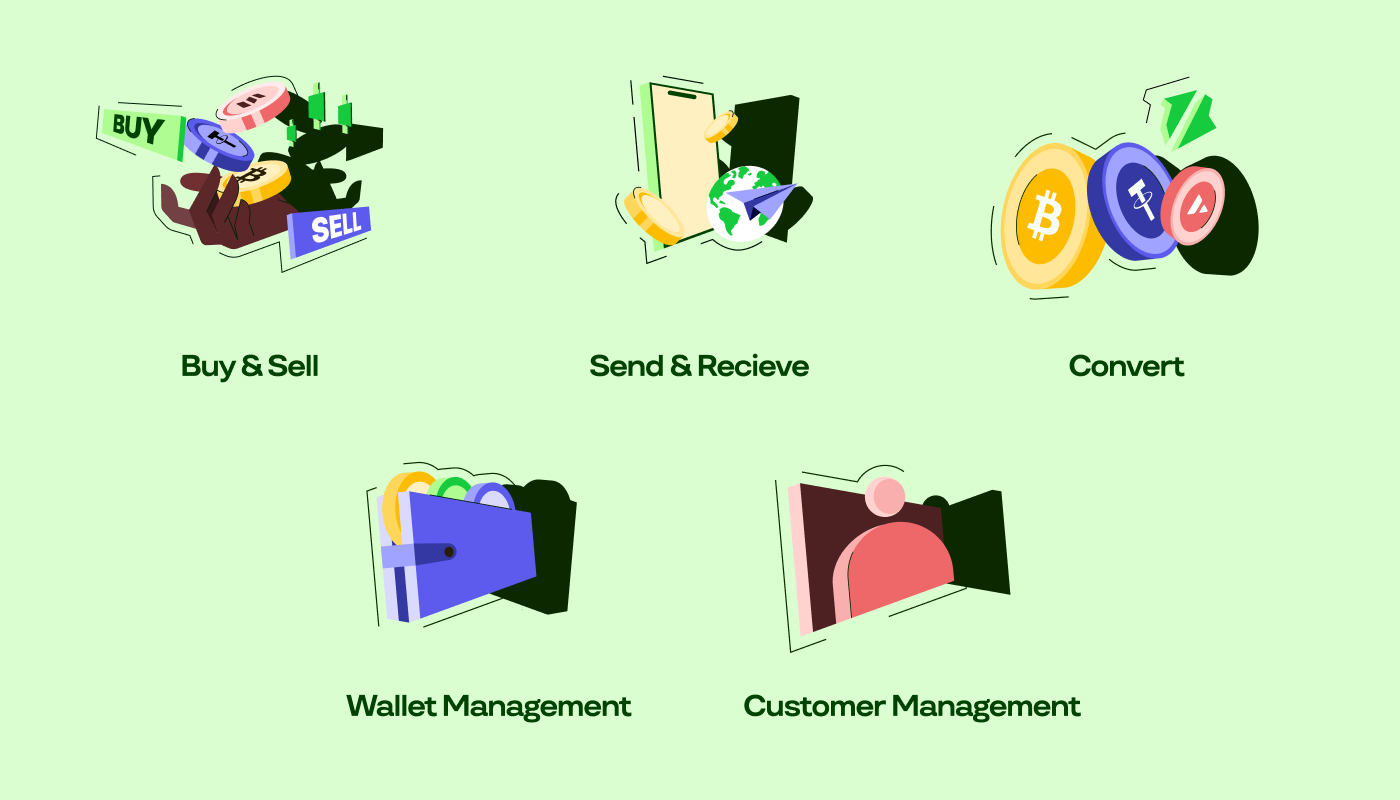
Buy and Sell
Convert between local currencies (NGN, KES) and stable coins and digital assets (Bitcoin, Ethereum, USDT, USDC, and others) at competitive rates. The API returns guaranteed quotes valid for a set window, eliminating execution risk.
Send and Receive
Move stablecoins and digital assets to any wallet address globally or receive from external addresses. The API manages wallet infrastructure, transaction broadcasting, and confirmation tracking.
Convert
Swap between different stablecoins and digital assets without touching fiat. Useful for businesses that need to rebalance holdings or provide exchange services to customers.
Customer Management
Provide digital asset services to your customers. With Busha Business customer management, you can onboard merchants and individuals alike and expose them to digital asset management.
Wallet Management
Get deposit addresses, check balances across multiple assets, and retrieve transaction history through standard REST calls.
How It Works
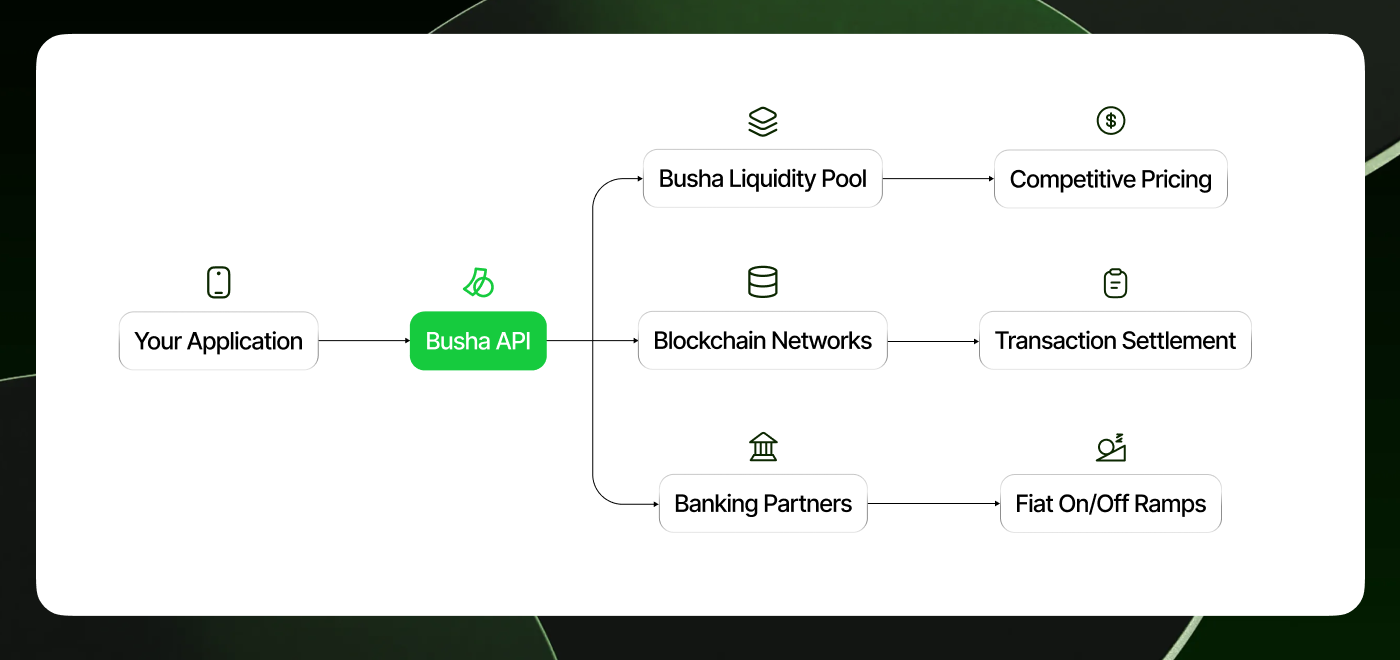
The typical flow follows a request-quote-execute pattern:
- Your application requests a quote for an operation (e.g., buying 1 BTC with NGN).
- Busha returns a guaranteed rate valid for several minutes.
- If your user accepts, you execute the transaction using the quote ID.
Busha handles the rest, providing liquidity from its own reserves, managing custody, settling the transaction, and sending webhooks as status changes.
Here is how this works in practice, broken into three distinct phases:
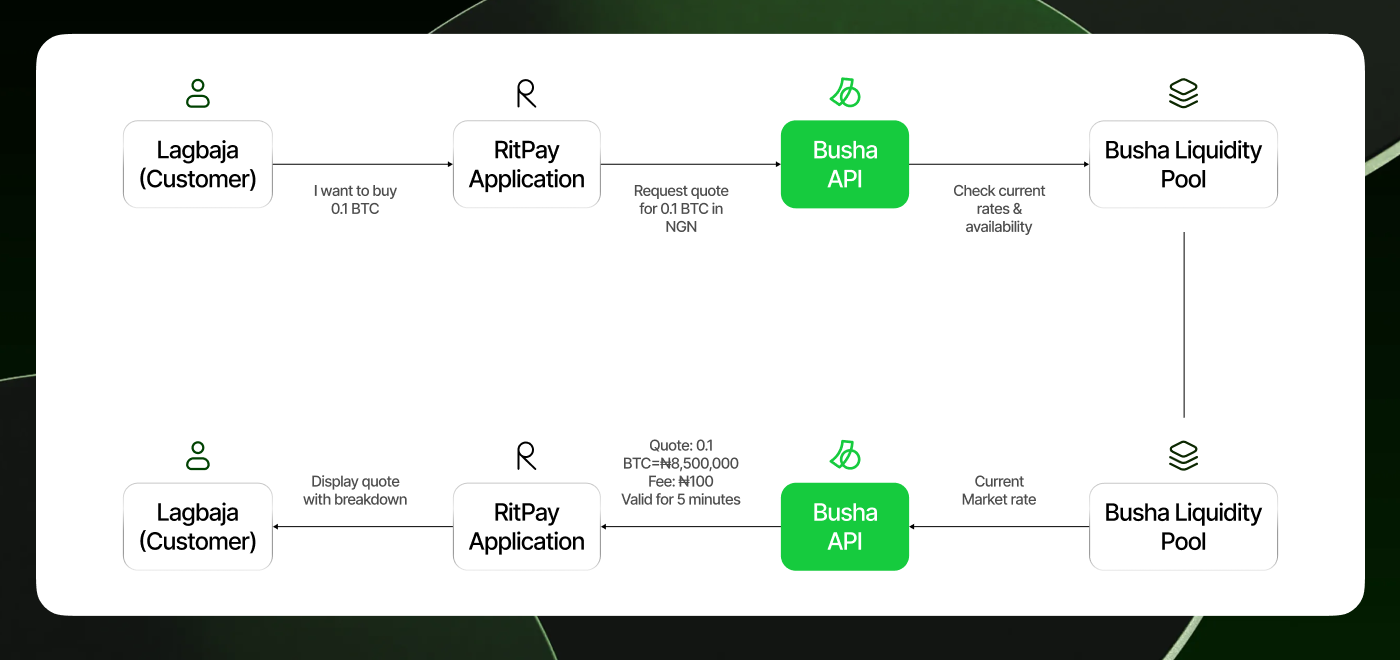
Phase 1: Request and Quote
Lagbaja wants to buy Bitcoin through RitPay. RitPay requests a quote from Busha, which checks its liquidity pool and returns a guaranteed rate.
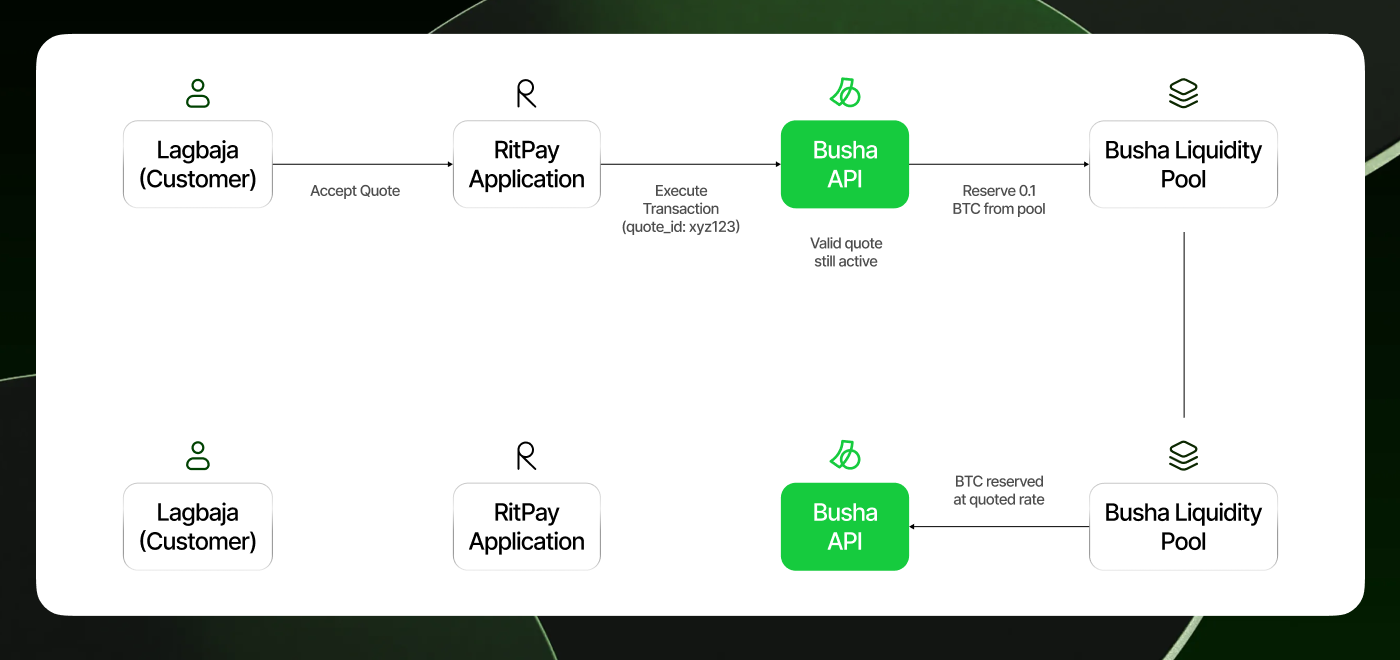
Phase 2: Acceptance and Execution
Once Lagbaja accepts the quote, RitPay executes the transaction. Busha validates that the quote is still active and reserves the Bitcoin from its liquidity pool.
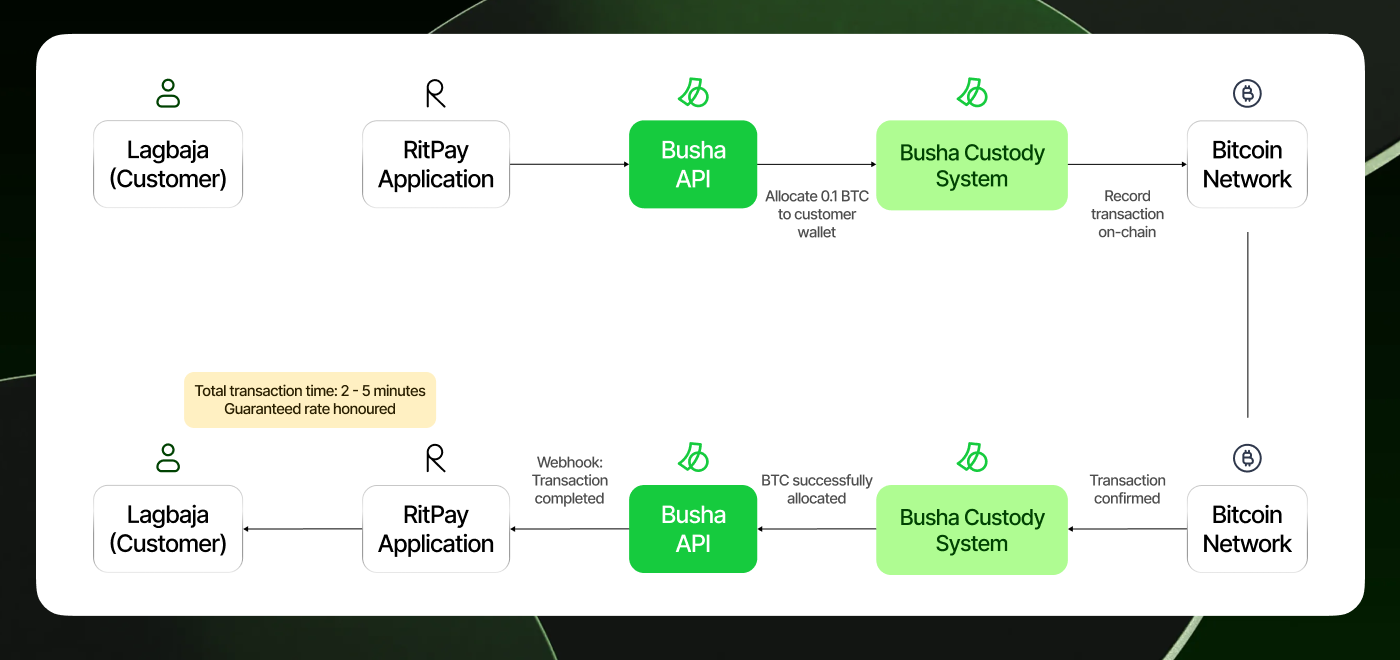
Phase 3: Settlement and Confirmation
Busha allocates the Bitcoin to Lagbaja’s wallet, records the transaction on the blockchain, and notifies RitPay that the transaction is complete.
Common Use Cases
The flexibility of Busha Business API means businesses across different sectors use it in ways tailored to their specific needs. Some build consumer-facing crypto exchanges, others use it as invisible infrastructure for cross-border payments. What unites them is the decision to treat stablecoin and digital asset infrastructure as solved problems rather than engineering projects. Here are the most common patterns:
Crypto Exchanges and Trading Platforms
Rather than building liquidity management and wallet infrastructure, exchanges integrate Busha for backend operations and focus on user experience and customer acquisition.
Remittance Services
Companies (like Payrit) use stablecoins and digital assets as a settlement layer, converting local currency to stablecoins, transmitting globally in minutes, then converting back to the destination currency. All through API calls.
Payroll Platforms
Businesses that pay remote contractors in stablecoins and digital assets use Busha to convert operating currency into digital assets and distribute payments programmatically. (time to revisit PaidHR and see if they’re ready to integrate now)
Savings and Investment Apps
Fintech applications offering crypto investment products use the API to execute trades on behalf of users without managing exchange relationships.
Payment processors
Merchants accepting stablecoins and digital asset payments use Busha to immediately convert to local currency, eliminating volatility exposure. They can receive and store in stablecoins and digital assets (Storipod, Fisco).
Integration Pattern
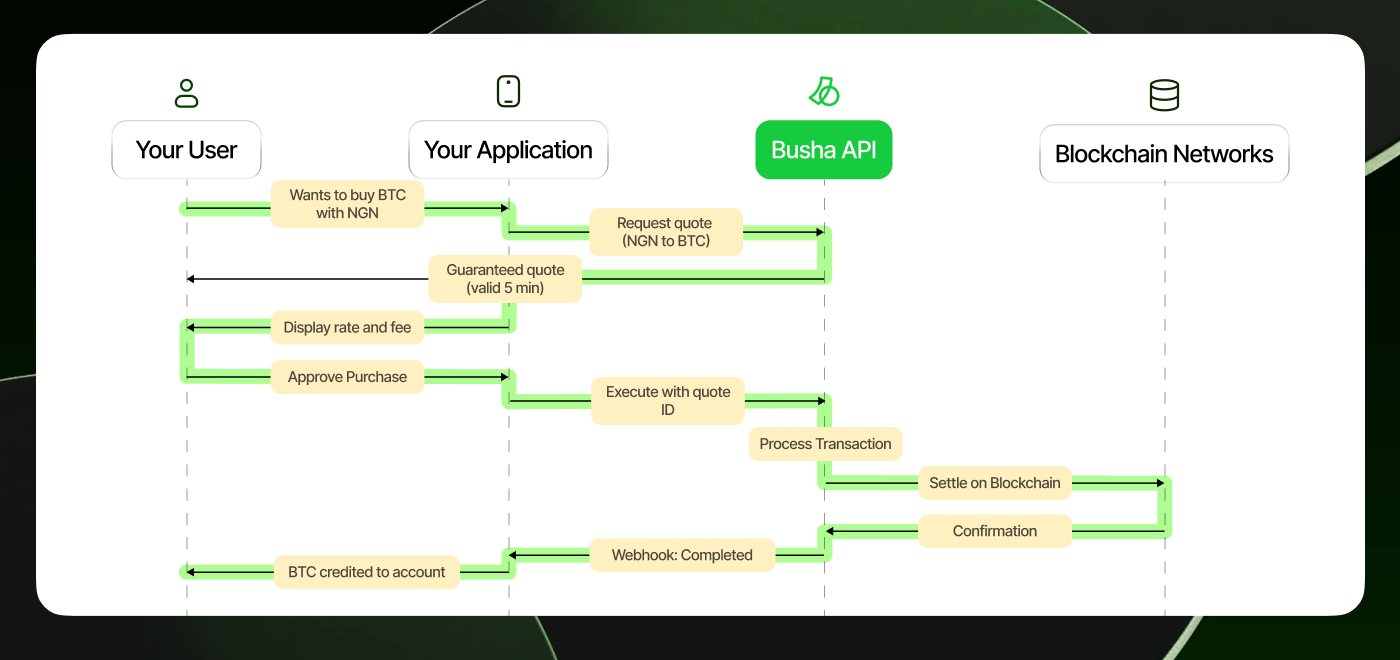
Most implementations follow four steps:
Account setup
Create a business account, complete KYB verification, and receive API credentials. Sandbox environment available for testing.
Generate quotes
When users want to transact, they can generate quotes specifying the operation type, amount, and currencies involved. Displayed the guaranteed rate to users.
Transaction Execution
Execute approved quotes within their validity window. Busha processes the transaction and returns a transfer ID for tracking.
Status Monitoring
Receive webhook notifications as transactions progress (pending, confirmed, completed) or poll status endpoints. Update your application state accordingly.
What Makes Busha Business API Different?
Local Currency Support
Direct integration with African banking systems means businesses can transact in Naira, Cedis, Shillings, and Rand without routing through intermediaries.
Guaranteed Quotes
Quotes lock rates for a set period. If stable coins and digital assets prices move during that window, Busha absorbs the difference. Users get exactly what they approved.
Regulatory Compliance
Busha handles KYC/AML requirements, transaction monitoring, and regulatory reporting. Businesses inherit compliance infrastructure rather than building it.
Unified Balance Management
Hold multiple stablecoins, digital assets, and fiat currencies in one account. Move between them programmatically as needed.
Webhook-Driven
Rather than polling for transaction status, receive push notifications as states change. Reduces API calls and improves user experience.
Technical Considerations
Busha Business API uses standard REST conventions with JSON payloads. Authentication is handled via API keys passed in the headers. All endpoints use HTTPS exclusively.
Rate limits apply, but are typically generous enough for production use. Contact support for high-volume scenarios. Rate limits can also be configured. Idempotency keys prevent duplicate transactions if requests retry due to network issues.
Webhooks require HTTPS endpoints on your infrastructure. Busha signs webhook payloads to verify authenticity. Webhook failures trigger automatic retries with exponential backoff.
Economics
Pricing is flat:
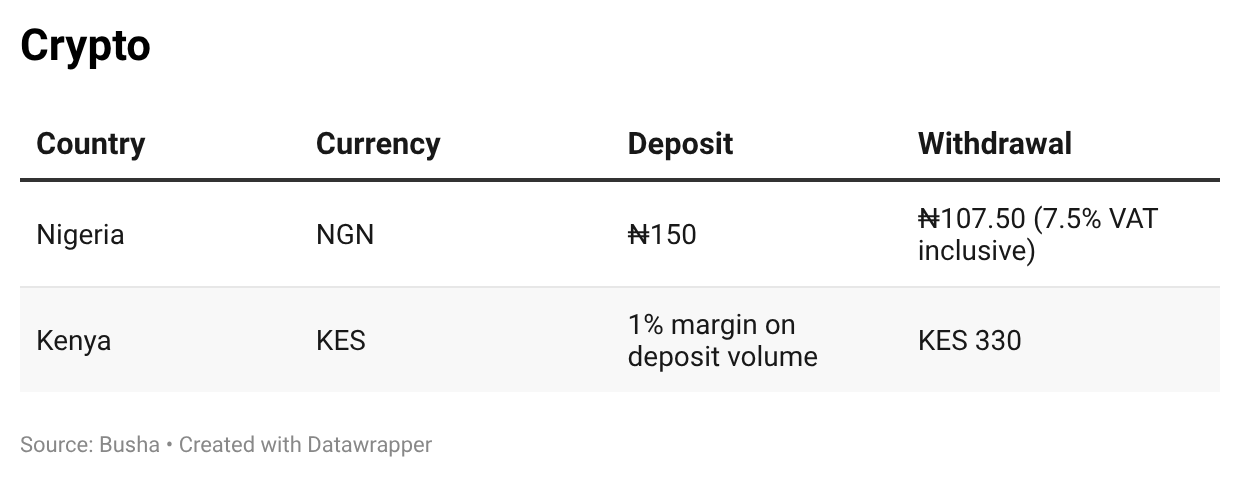
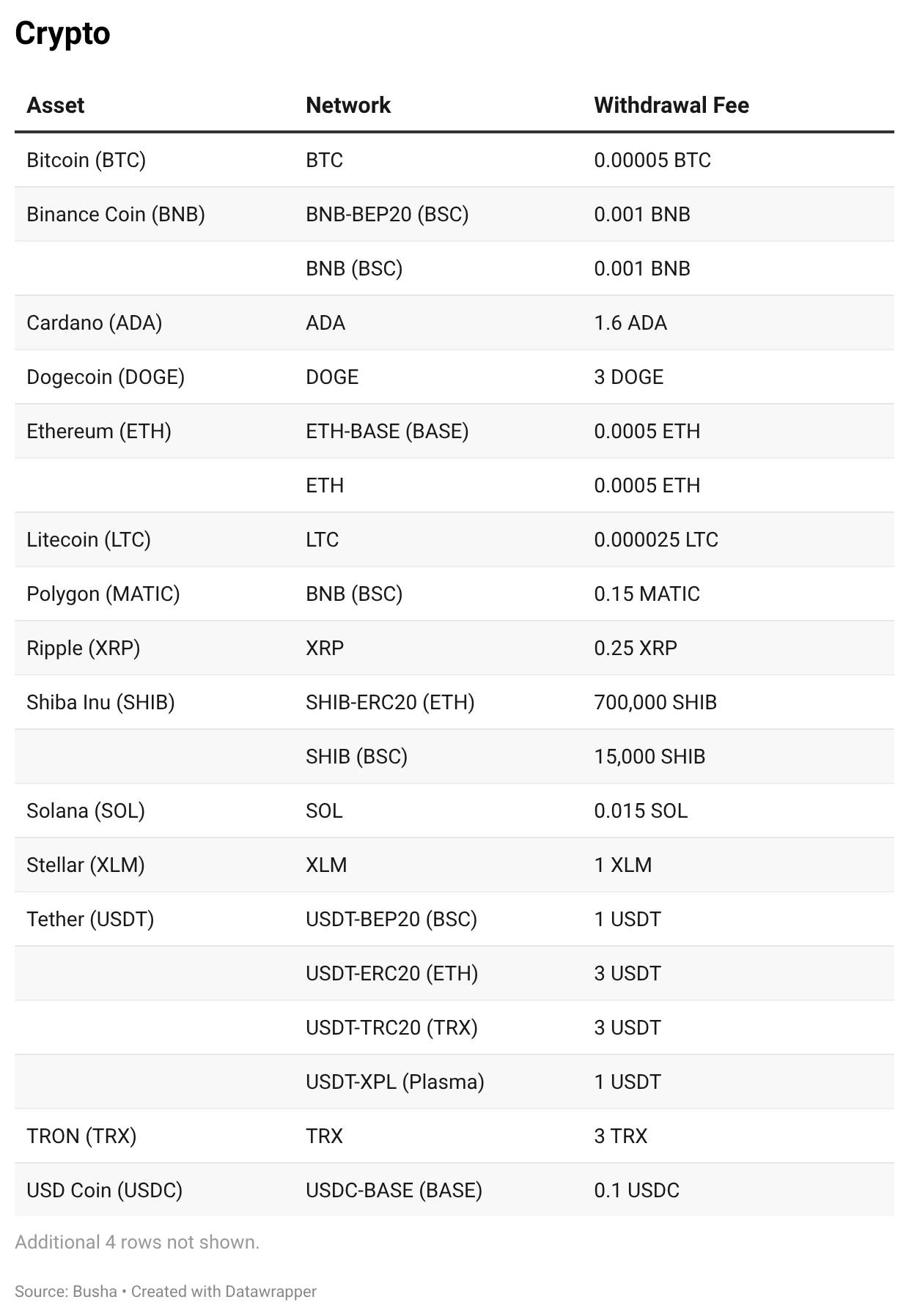
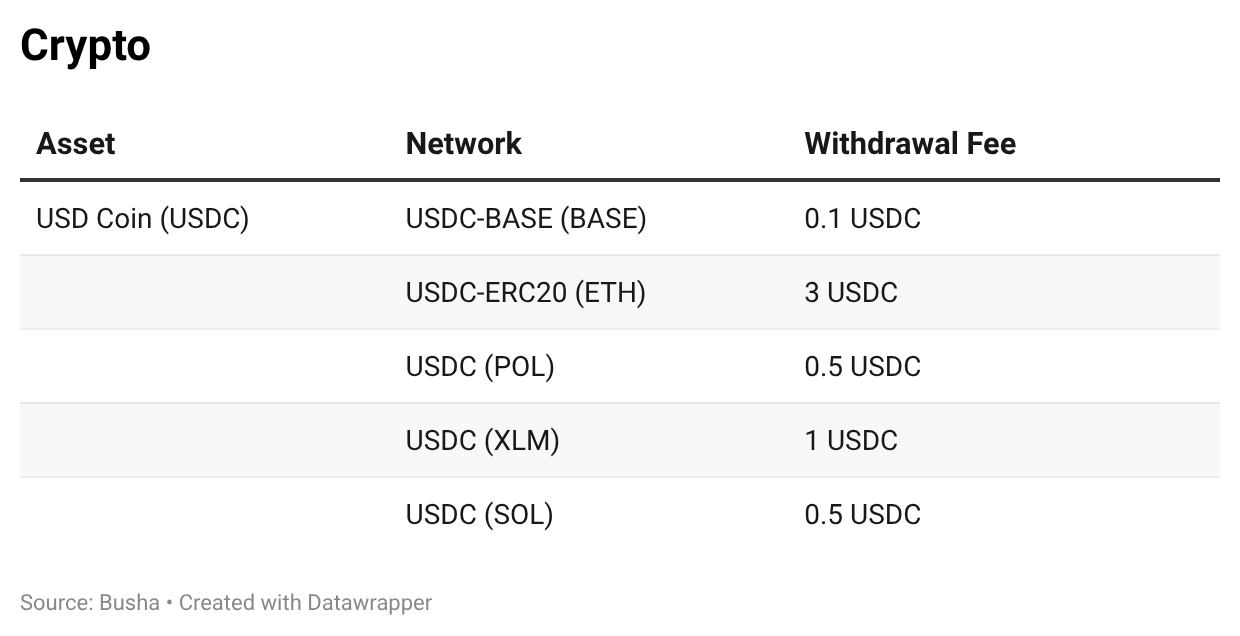
No setup fees or monthly minimums. You pay only for transactions processed.
Getting Started
Documentation lives here with comprehensive guides for each endpoint, authentication methods, webhook handling, and error codes.
The typical onboarding path:
- Create a business account on Busha
- Complete KYB verification (usually 48-72 hours)
- Access the sandbox environment and API credentials
- Build integration using documentation
- Test thoroughly in the sandbox
- Create Production API keys from your dashboard
- Go live
Most development teams complete integration in one to two weeks, depending on complexity. Busha provides technical support throughout the process.
Conclusion
At its core, the Busha Business API addresses the "crypto infrastructure problem": the gap between wanting to offer stablecoin and digital asset services and having the engineering resources to build them. It transforms months of infrastructure work into a weekend integration project.
For African businesses, it provides direct access to global stablecoin and digital asset markets without the friction of international banking relationships, foreign accounts, or complex compliance requirements. Local currency in, stablecoins and digital assets out. Or stablecoins and digital assets in, local currency out. All programmatically, all through standard API calls.
The result is that businesses can focus on their unique value proposition: the customer experience, the specific use case, and the market they serve, rather than becoming experts in blockchain infrastructure, custody solutions, and regulatory compliance. The infrastructure becomes a solved problem, reducing time-to-market and capital requirements for anyone building crypto-enabled products in Africa.
Disclaimer:
The information provided in this post is for educational and informational purposes only and does not constitute financial, investment, legal, or tax advice. Busha provides the content on this blog on an “as is” and “as available” basis and makes no guarantees regarding the accuracy or completeness of any content hosted on this blog. We do not recommend any product/service and we invite our readers to conduct their own research and consult with a licensed financial advisor before making any investment decisions. Digital asset markets are highly volatile and involve significant risk. We expressly disclaim all liability for any loss incurred based on reliance on any content hosted on the Busha Blog.