
Share


Evelyn (28) runs a thriving crochet business from Lagos. Her handcrafted pieces have found an audience far beyond Nigeria, with most of her customers coming from the US, UK, and Canada through platforms like Etsy.
Business is good. At least, that's what it looks like from the outside.
Behind every order is a race against time. Evelyn sources premium yarn from suppliers in China and Europe, handcrafts each piece herself, and works to meet customer expectations in an era where everyone wants everything on demand.
In this kind of business, delays are expensive. If suppliers don't receive payment on time, shipments don't move. If orders arrive late, customer trust suffers.
Yet, moving money across borders remains one of the biggest sources of friction in her business.
Like many African entrepreneurs, she relies on international bank transfers and dollar cards to pay suppliers and receive payments from overseas customers. The process works, but rarely smoothly.
Transfers can take days to settle. Intermediary banks deduct unexpected fees. Payment costs slowly eat into margins.
Evelyn assumes this is simply the price of running a global business from Africa.
What she doesn't realize is that businesses like hers are increasingly using another option: stablecoins.

Businesses Are Turning to Stablecoins for Cross-Border Payments
Stablecoins are increasingly becoming part of how businesses move money globally.
According to a 2025 survey, six in ten Fortune 500 executives said their companies were actively exploring blockchain initiatives, while 81% of crypto-aware small and medium-sized businesses expressed interest in using stablecoins for business operations.
This shift is particularly visible in Africa.
Stablecoins now account for roughly 43% of cryptocurrency transaction volume in Sub-Saharan Africa, driven largely by the need for faster international payments and more reliable access to dollar-denominated assets.
For African businesses, stablecoins aren't about speculation. They're becoming financial infrastructure.
A Visa report highlighted the case of an African food producer that could source only about 30% of the dollars it needed through traditional banking channels. Another pharmaceutical company adopted stablecoins to pay overseas suppliers and maintain medicine supplies across local markets.
When businesses cannot afford delays, they seek alternatives that help them keep operations running.
What Are Stablecoins?
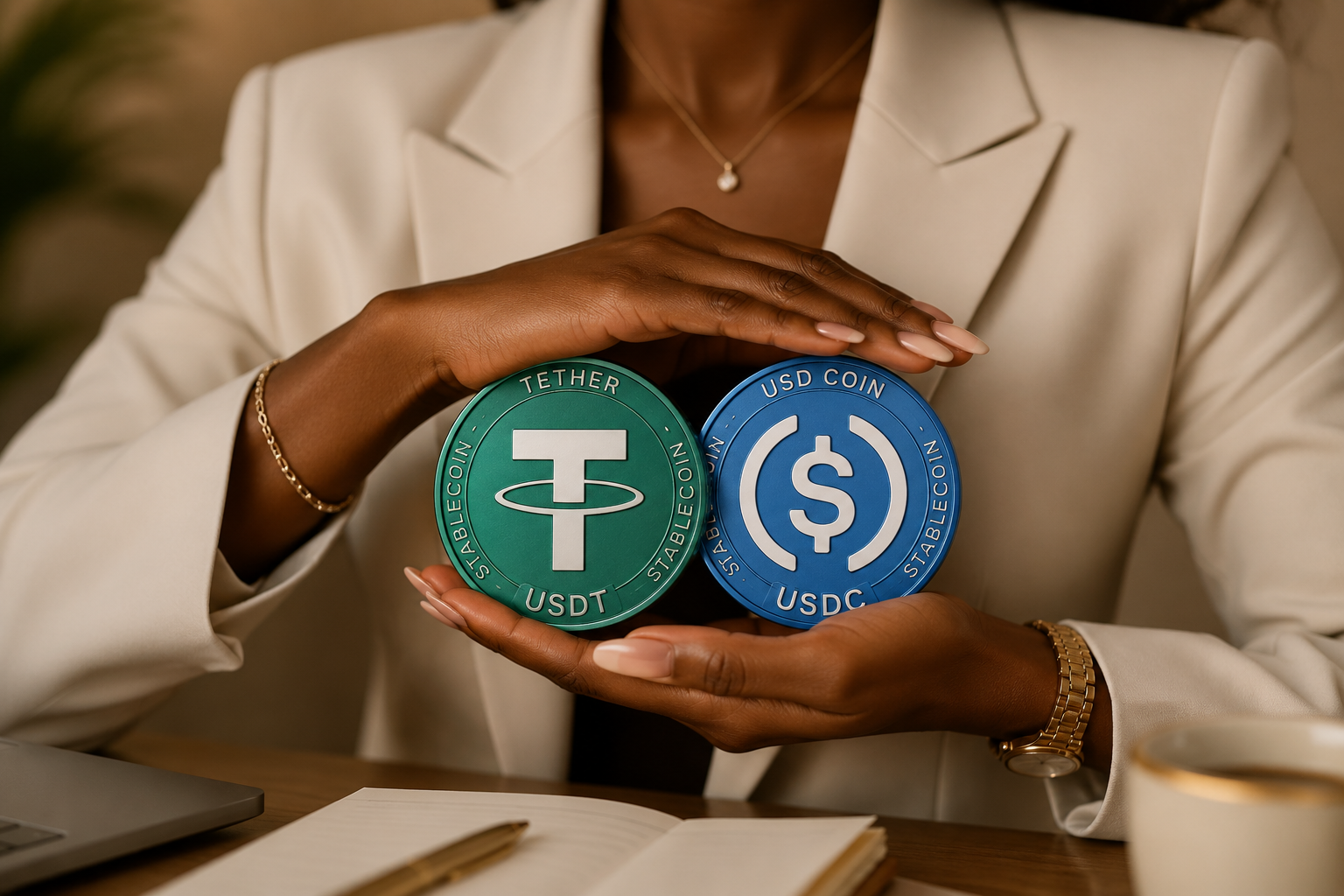
Stablecoins are digital currencies designed to maintain a stable value by being tied to another asset, most commonly the US dollar.
For example:
- 1 USDT is designed to equal approximately 1 USD
- 1 USDC is designed to equal approximately 1 USD
Unlike cryptocurrencies such as Bitcoin, whose prices can fluctuate significantly, stablecoins are designed for practical financial activities such as payments, settlements, and storing value.
Think of stablecoins as digital dollars that can be transferred over blockchain networks, often within minutes rather than days.
How Stablecoins Work for Businesses
Using stablecoins in business operations is simpler than many assume.
Here's what it typically looks like:
- Receive payments globally: Businesses accept payments from customers in stablecoins through supported payment channels.
- Hold funds in dollar-denominated assets: Instead of immediately converting proceeds into local currency, businesses can retain value in stablecoins.
- Pay international suppliers: Suppliers abroad receive stablecoin payments directly, often settling much faster than traditional bank transfers.
- Convert when needed: Businesses can convert stablecoins into local currency to cover operational expenses.
For companies operating across borders, stablecoins introduce flexibility into cash flow management.
Why African Businesses Are Adopting Stablecoins
Several factors are driving adoption across the continent:
- Faster settlement: Traditional international transfers can take one to five business days. Stablecoin transactions can settle within minutes.
- Lower transaction costs: Businesses often face wire fees, card charges, intermediary bank deductions, and foreign exchange spreads. Stablecoins can significantly reduce these costs.
- Improved access to dollar-denominated value: In markets experiencing foreign exchange shortages, stablecoins provide businesses with an alternative way to access and hold dollar-linked assets.
- Better treasury management: Businesses can manage cash reserves more efficiently without having to navigate multiple banking systems.
- Global accessibility: Companies can transact with suppliers, freelancers, and customers regardless of geography.
Five Ways Businesses Are Using Stablecoins Today
- Paying International Suppliers: Importers use stablecoins to settle invoices with manufacturers and suppliers abroad without lengthy banking delays.
- Receiving Cross-Border Customer Payments: Businesses selling through platforms like Shopify, WooCommerce, or Etsy can accept payments from international customers more efficiently.
- Managing Business Treasury: Companies hold a portion of working capital in stablecoins to preserve value and improve liquidity management.
- Paying Global Contractors: Businesses working with international freelancers, agencies, or remote employees use stablecoins for faster payouts.
- Expanding Into New Markets: Stablecoins reduce some of the payment barriers associated with entering new international markets.
Stablecoins vs Traditional International Payment Methods
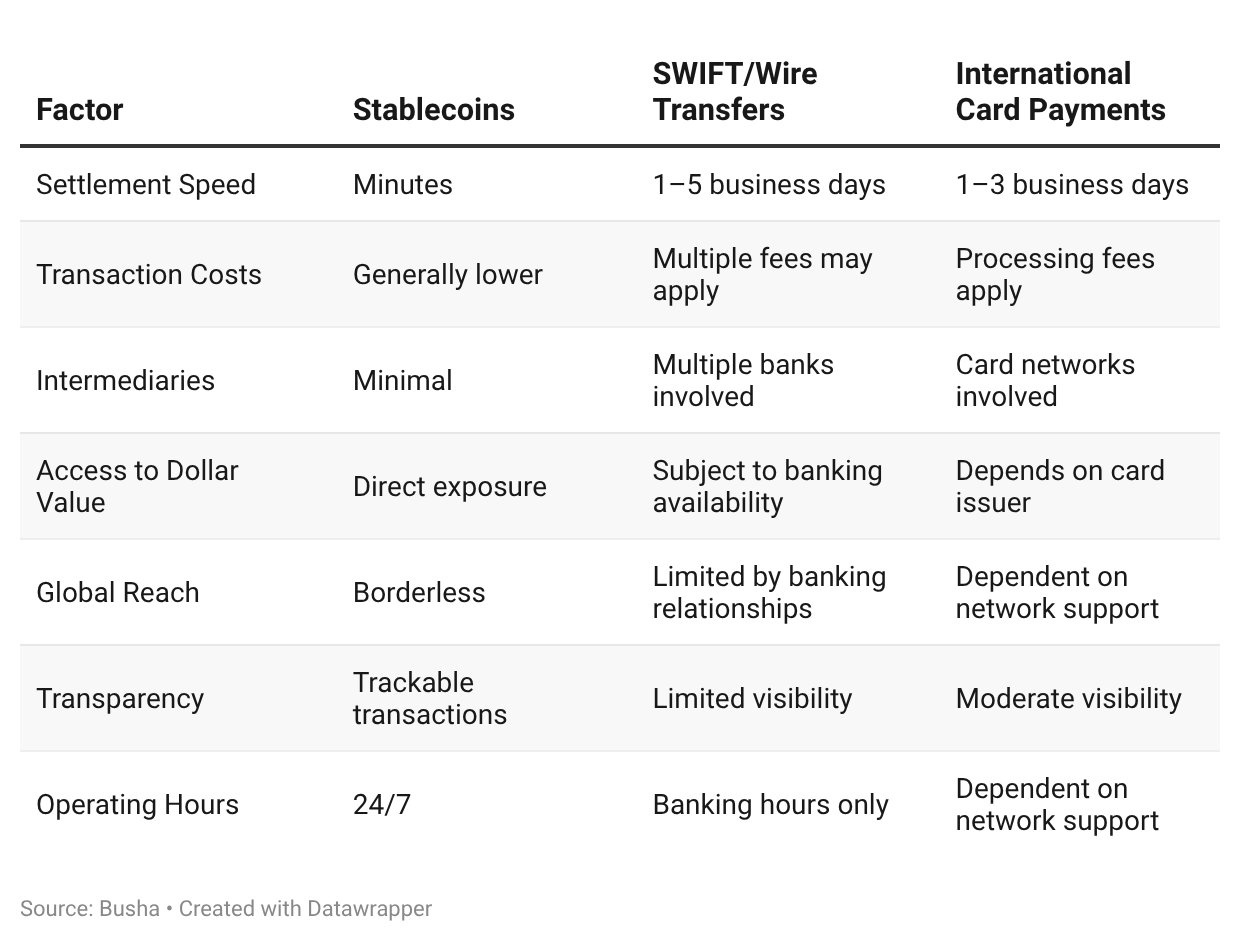
While stablecoins may not entirely replace traditional payment rails, they provide businesses with another tool to manage international transactions more efficiently.
How Customers Benefit When Businesses Accept Stablecoins
The advantages extend beyond the business itself.
Customers benefit from:
- Faster payment processing
- Fewer payment failures
- More payment options at checkout
- Smoother international purchasing experiences
- Potentially lower costs through improved operational efficiency
In a world where customer expectations continue to rise, reducing payment friction can become a competitive advantage.

What This Could Look Like for Evelyn's Business
Now consider Evelyn running her crochet business with stablecoin-enabled payment infrastructure.
Instead of waiting days for supplier payments to clear, she settles invoices quickly.
Instead of worrying about unexpected intermediary deductions, she gains greater predictability over transaction costs.
Instead of navigating multiple payment bottlenecks, she receives international payments through streamlined channels.
This means:
No more:
- Delayed supplier settlements
- Unpredictable banking deductions
- Extended waiting periods for international transfers
- Limited payment flexibility for global customers
Instead:
- Faster access to international revenue
- Quicker supplier payments
- Improved cash flow visibility
- More time focused on growing the business rather than managing payment logistics
For a business built on craftsmanship and customer trust, reducing payment friction can translate into stronger operations and better customer experiences.
How Busha Business Can Help
Busha Business helps African businesses simplify how they send, receive, and manage international payments using stablecoins.
Whether you're paying overseas suppliers, receiving payments from international customers, or managing cross-border cash flows, stablecoin-powered infrastructure can help businesses move money faster and more efficiently.
For entrepreneurs like Evelyn, the goal isn't to become crypto experts.
It's to spend less time worrying about how money moves and more time building businesses that customers love.
Because in global commerce, the businesses that win aren't always the ones with the best products.
They're often the ones with the least friction.
Ready to simplify international payments?
Create a Busha Business account to streamline cross-border payments with stablecoins. Pay global suppliers faster, receive payments from customers worldwide, and reduce friction in traditional international transactions.